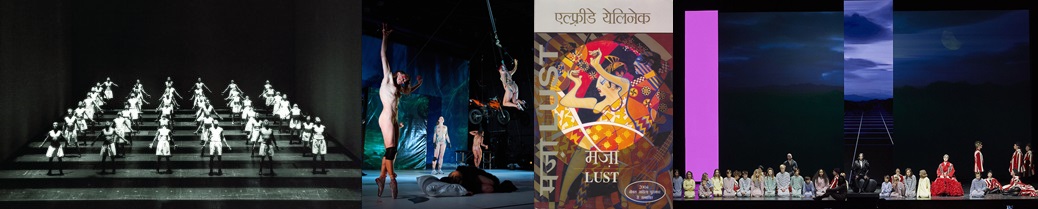
This paper investigates the Italian reception of Elfriede Jelinek through the lens of mediation, with particular attention to the role of publishers, translators, editors, and cultural institutions in shaping the circulation and interpretation of her work. Drawing on Pierre Bourdieu’s theory of the literary field and André Lefevere’s concept of rewriting, the project conceptualizes reception not as a passive process, but as an active site of ideological negotiation, in which aesthetic, political, and market-driven forces intersect.
The Italian case offers a particularly revealing perspective. Since the early 1990s, Jelinek’s works have often been framed within an eroticized interpretive horizon, especially through editorial positioning, paratextual strategies, and marketing choices. This framing, while
contributing to the author’s visibility within the heteronomous pole of the literary field, has simultaneously obscured the critical and political dimensions of her writing, which engage with issues such as gender violence, the legacy of fascism, and the mechanisms of capitalist and media-driven societies.By focusing on key mediators—such as translators, editors, and curators—and on specific moments of reception (including re-editions, theatrical adaptations, and the impact of Michael Haneke’s film adaptation The Piano Teacher), this paper examines how Jelinek’s work has been continuously recontextualized and, at times, strategically misread. These processes can be understood as forms of rewriting that not only adapt the text to new audiences, but also participate in broader cultural dynamics of selection, simplification, and ideological framing.
Within the framework of the workshop’s focus on Science – Art – Democracy, the paper argues that the mediation of Jelinek’s work provides a compelling case study for analyzinghow literary texts that critically interrogate anti-democratic tendencies can themselves be neutralized or transformed by the very cultural systems that disseminate them. In particular, the reduction of Jelinek’s complex linguistic and aesthetic strategies to an “erotic” label can be seen as part of a broader mechanism of cultural consumption that privileges immediacy, affect, and marketability over critical engagement.
Methodologically, the project combines qualitative analysis of paratexts with digital humanities tools, including data visualization and social network analysis, in order to mapthe relationships between mediators and to visualize shifts in the author’s position within the Italian literary field over time. These visualizations are not merely illustrative, but function as analytical instruments that make visible otherwise opaque structures of cultural production and circulation.
Ultimately, the paper contributes to current debates on the role of literature and the arts in contemporary democratic societies by highlighting the tension between critical artistic production and the conditions of its mediation. It suggests that understanding these mediating processes is essential for assessing the capacity of literature to intervene in, resist, or be co-opted by dominant ideological and economic frameworks.
Bibliography
- Bourdieu, Pierre. 2005. Le regole dell’arte. Genesi e struttura del campo letterario. Milano: Il Saggiatore.
- Casanova, Pascale. 1999. La République mondiale des lettres. Paris: Seuil.
- Lefevere, André. 2017. Translation, Rewriting, and the Manipulation of Literary Fame. Routledge.
- McDonough Dolmaya, J. (2024). Digital Research Methods for Translation Studies. Routledge.
- Sisto, Michele. 2023. World literature(s). Traduzioni e storia letteraria nazionale. Rome: Sapienza University Press.
 JeliNetz